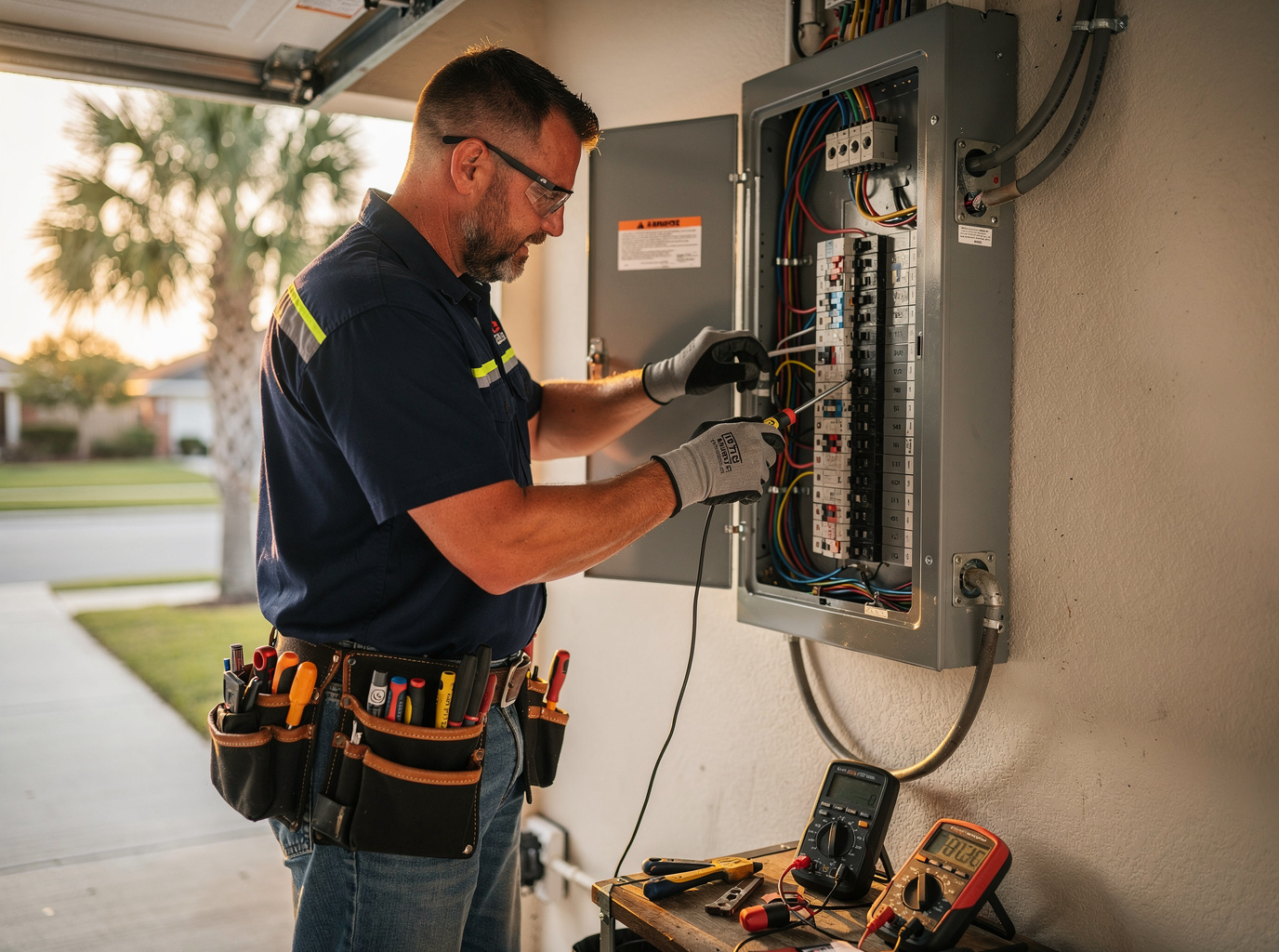
Jacksonville homes in Riverside, Avondale, and Springfield often date to the 1920s through 1960s and still carry 60-amp or 100-amp panels that cannot safely handle modern loads from central air, electric ranges, and EV chargers. Upgrading to 200 amps requires pulling permits through Duval County and coordinating with JEA for service drops, especially near the St. Johns River where moisture accelerates corrosion on older breakers and bus bars. Hot subtropical summers push air-conditioning units to run longer, making undersized panels trip frequently during peak humidity months.
In Mandarin and Arlington neighborhoods, newer construction sometimes still has 150-amp panels that homeowners want increased when adding pools or workshops. The upgrade process involves assessing the existing service entrance, checking for aluminum wiring common in 1970s builds, and ensuring the panel location meets clearance rules near flood-prone zones along the river. Electricians must also account for the mild winters that keep outdoor disconnects exposed to salt air from Atlantic Beach and Neptune Beach, which speeds up oxidation on lugs and grounds.
Work in Downtown Jacksonville and near EverBank Field often involves tighter access in historic buildings where conduit runs are embedded in masonry. Upgrades here frequently require coordinating with building management to avoid disrupting events at the Cummer Museum or Kingsley Plantation vicinity. Proper torque on new breakers and use of copper pigtails on aluminum circuits prevents future arcing issues that the humid climate can exacerbate over time.
Technician insight
In Jacksonville the thing that catches most people out with Electrical Panel Upgrade is the aluminum wiring and undersized service entrances in pre-1970 homes across Riverside and Avondale, where our humid summers and river proximity make corrosion on lugs progress faster than owners expect.
Riverside Home Panel Upgrade
A 1950s Riverside bungalow kept tripping breakers during summer afternoons. Inspection showed a 100-amp panel with corroded connections near the St. Johns River humidity. We replaced it with a 200-amp panel, added copper pigtails on the aluminum circuits, and coordinated the JEA drop upgrade. The home now runs the central AC and new kitchen circuits without interruption.
Electrical Panel Upgrade Services We Offer
✓200 Amp Panel Upgrade
Replaces older 100-amp or 60-amp panels with a 200-amp main breaker panel to support added circuits for air conditioning and appliances in Jacksonville homes.
✓Fuse Box to Breaker Conversion
Converts outdated fuse boxes common in Riverside and Springfield homes to modern breaker panels that reset without replacement parts.
✓Service Entrance Upgrade
Updates the meter base and overhead or underground service wires to handle higher amperage near the St. Johns River where corrosion is common.
✓Subpanel Installation
Adds a secondary panel in garages or workshops for properties in Mandarin and Arlington that need dedicated circuits for pools or tools.
✓Aluminum Wiring Remediation
Addresses aluminum branch wiring found in 1970s Arlington homes during panel upgrades by installing copper pigtails or CO/ALR devices.
Electrical Panel Upgrade Cost in Jacksonville, FL
| Service | Typical Range | What Affects It |
|---|---|---|
| 200 Amp Panel Upgrade | $1,200–$2,400 | Varies with service entrance type and home age in older neighborhoods |
| Fuse Box Conversion | $900–$1,800 | Higher when aluminum wiring remediation is required |
| Subpanel Addition | $600–$1,100 | Depends on distance from main panel and circuit count |
| Permit And Inspection Fees | $150–$350 | Set by Duval County and JEA requirements |
Ranges are typical for Jacksonville, FL and confirmed with an exact written quote before any work starts.
How it works
- 1
Site Assessment
Technician inspects the existing panel, service entrance, and load calculations in the specific Jacksonville neighborhood.
- 2
Permit And Utility Coordination
Files Duval County permits and schedules JEA for any service drop changes before work begins.
- 3
Panel Replacement
Removes old equipment, installs new panel with proper grounding, and updates breakers during scheduled hours.
- 4
Testing And Final Inspection
Verifies all circuits, torque connections, and passes county inspection before restoring power.
Pricing
Upfront quotes given after on-site assessment during business hours.