2026-08-21 · Ray Porter
How To Check Your Electrical Panel After A Jacksonville Storm
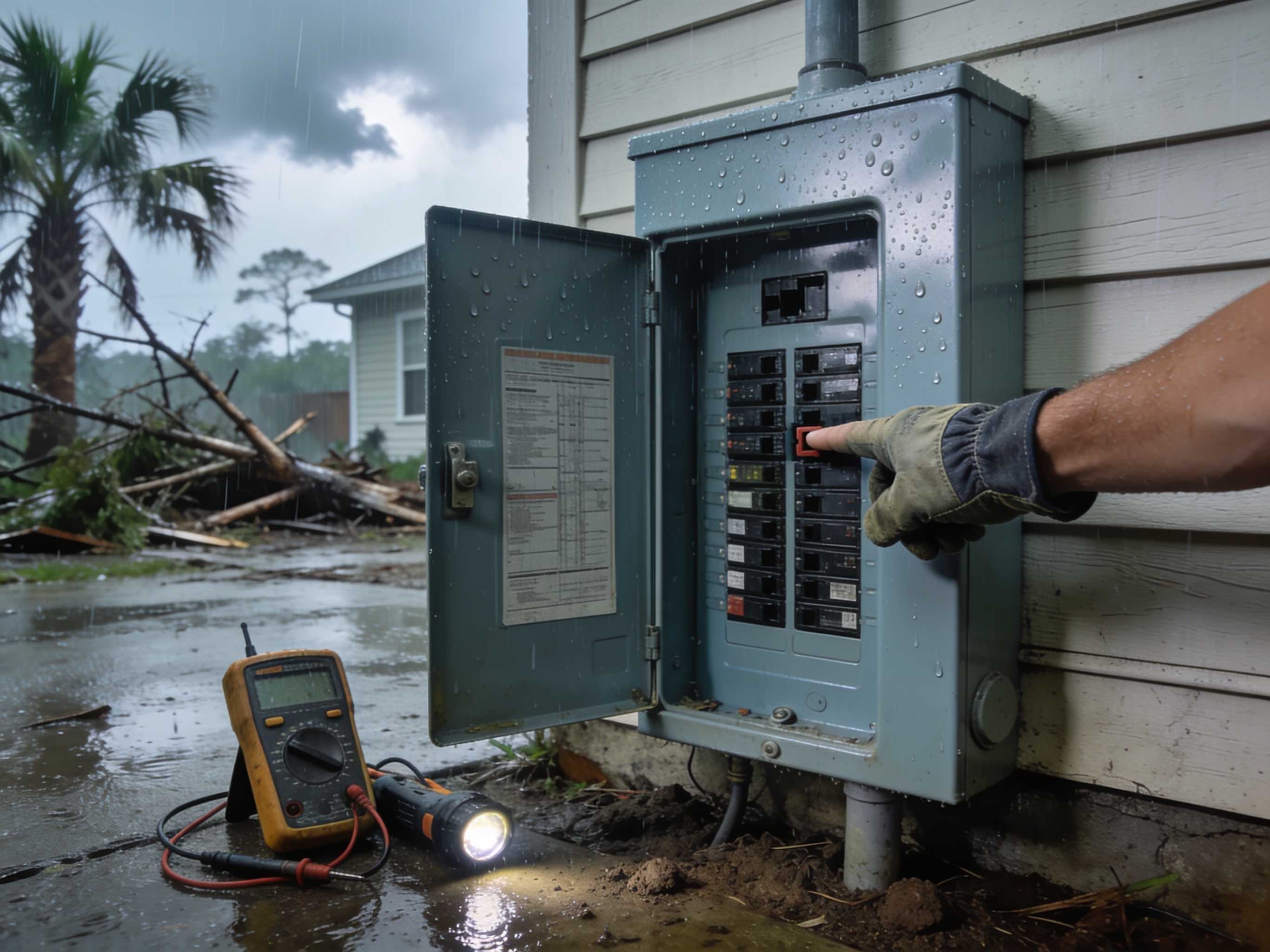
After a Jacksonville storm, begin your electrical panel check only if power is fully restored and no standing water remains near the panel, then shut off the main breaker before opening the cover to look for moisture, corrosion, or tripped breakers that indicate lightning or flood effects common in Duval County.
Safety Precautions Before Opening the Panel
Jacksonville's humid subtropical climate brings frequent thunderstorms that deliver heavy rain and lightning, often flooding low-lying spots in Riverside and Avondale. Never approach the panel if water has entered the home or if you smell burning. Wear insulated gloves and use a non-contact voltage tester to confirm no live current reaches the cover. Older homes built before 1970 in Springfield frequently have fuse boxes or 100-amp panels that corrode faster after moisture exposure. If the area around the panel feels damp or you see discoloration on the wall, stop and wait for drier conditions typical after mild winter fronts. Document any visible issues with photos for later reference when discussing repairs.
Visual Signs of Storm Damage in Jacksonville Panels
Open the panel door after confirming power is off and scan for rust on breakers, melted insulation, or burn marks around wires, all frequent after lightning strikes near the St. Johns River. Check the main lugs and neutral bar for greenish corrosion caused by salt air that drifts inland from Atlantic Beach and Neptune Beach. In Mandarin neighborhoods with many slab-on-grade homes, ground moisture can wick up into wall cavities and reach the panel base. Count the number of double-tapped breakers or overloaded circuits, as these weaken during power surges. Note the panel brand and amperage rating so you can compare against current needs in homes throughout Orange Park.
Step-by-Step Inspection Process
Reset any visibly tripped breakers one at a time after the storm passes, then restore power to test outlets and lights in sequence while monitoring for humming or warmth. Test GFCI and AFCI breakers if present, since Jacksonville's building codes require them in wet areas and they trip more often after humidity spikes. Use a multimeter to verify voltage at 120 volts on standard circuits and 240 volts on larger ones feeding air conditioners common in hot summers. Record the condition of each breaker and wire in a notebook for reference during future checks. If you find more than two breakers that will not reset or smell ozone inside the panel, leave the cover off and avoid restoring power until inspected further.
When to Schedule Professional Service
Persistent tripping after reset, visible water lines inside the panel, or warm spots on the cover all point to damage that requires an electrical panel upgrade or circuit breaker replacement. Homes in Downtown Jacksonville and San Marco often need these updates because original 60-amp services cannot handle modern loads after storm-related surges. Review the related guide on cost factors for upgrading outlets in older Jacksonville homes to understand how panel condition affects whole-house projects. The business operates Mon–Fri 8am–6pm and Sat 9am–2pm for follow-up inspections once conditions stabilize.