2026-08-21 · Ray Porter
Preparing Outdoor Lighting For Jacksonville's Summer Humidity And Heat
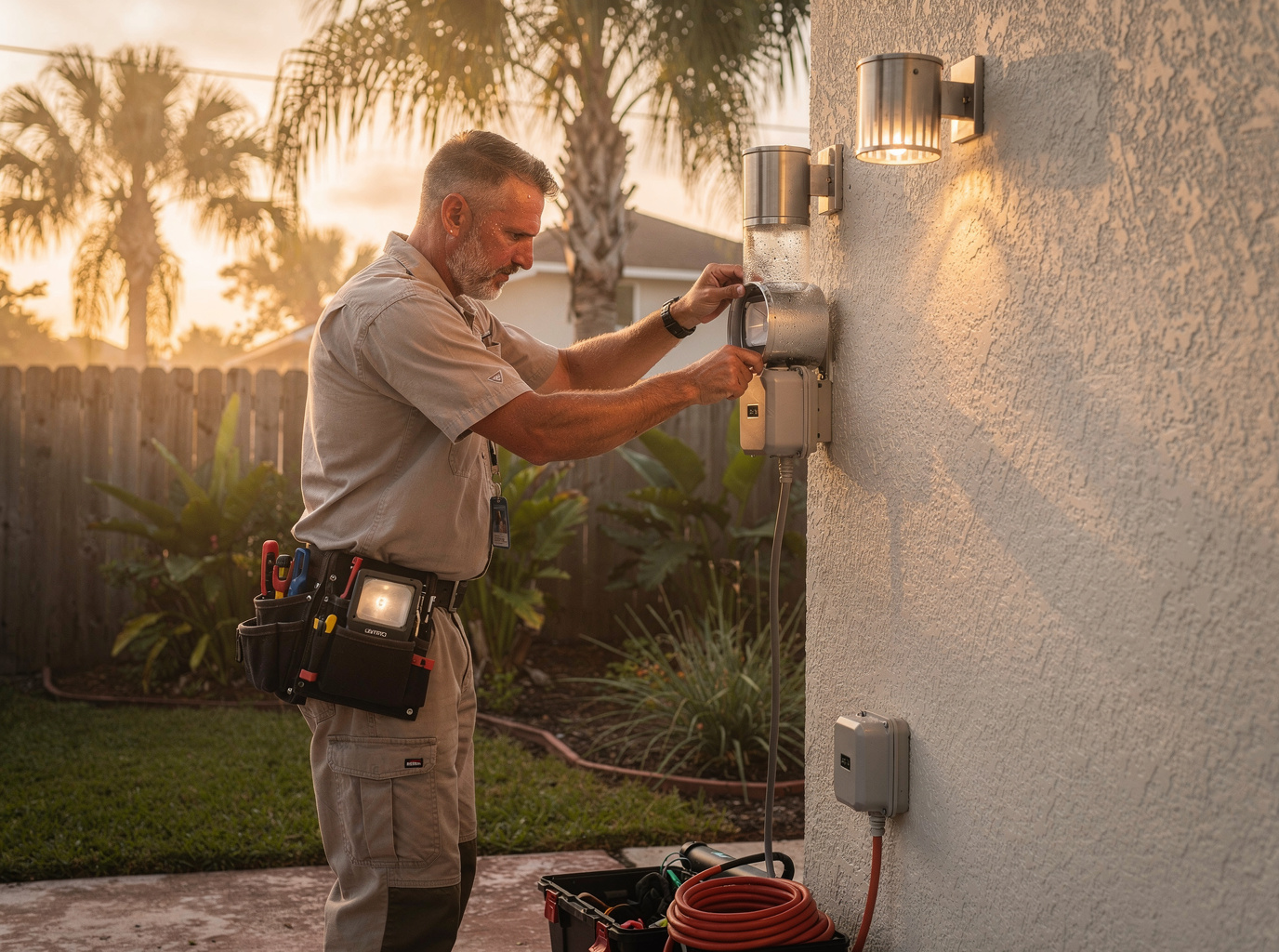
Jacksonville's humid subtropical climate with hot summers requires sealing all outdoor lighting connections and using wet-location rated fixtures to prevent moisture intrusion from the St. Johns River and nearby waterways, which can reduce fixture failures by addressing condensation before it damages wiring.
Climate Effects on Fixtures in Duval County
High summer humidity combined with temperatures often above 90 degrees creates constant condensation inside fixtures across neighborhoods such as Riverside, San Marco, and Mandarin. Older housing stock in these areas features exposed wiring runs and aluminum components that corrode faster when moisture lingers overnight. The mild winters provide little relief because the humidity never drops enough to dry out seals. Homeowners notice flickering or dimming first in ground-mounted path lights and wall sconces near the river. Checking gaskets and replacing degraded silicone annually stops water entry before it reaches the sockets. Fixtures installed without proper weep holes trap heat and accelerate bulb burnout during peak months.
Selecting Appropriate Fixtures and Materials
Choose fixtures labeled for wet locations with IP65 or higher ratings and stainless-steel hardware when replacing units in Avondale or Arlington. These resist the salt-tinged air that travels inland from Atlantic Beach and Neptune Beach. Avoid standard indoor-rated cans or plastic housings that crack under UV exposure and trap humidity. LED modules rated for 50,000 hours perform better than older halogen bulbs because they generate less heat that can warp seals. When upgrading wiring runs, consider tying into existing circuits only after verifying load capacity. Homeowners in Springfield often discover that 12-gauge copper withstands the environment longer than thinner aluminum feeds common in 1970s builds.
Installation Practices for Local Conditions
Mount fixtures with a slight downward angle so water sheds away from the lens rather than pooling. Use marine-grade butyl tape on all joints and conduit entries to block vapor in areas like Downtown Jacksonville where buildings sit close to the river. Secure boxes with stainless screws and apply dielectric grease to terminals before tightening. In Mandarin homes with mature landscaping, route conduit above grade where possible to avoid soil moisture that rises during heavy rains. Always test the full circuit under load after installation to confirm no voltage drop occurs from corrosion at connections. Proper spacing between fixtures also reduces heat buildup that compounds humidity effects.
Seasonal Maintenance Steps
Inspect outdoor lighting every spring before humidity peaks by removing lenses and cleaning interior surfaces with a dry cloth. Replace any gaskets showing cracks or compression set, which typically occurs after three to four summers. Test photocells and timers for accurate operation because high heat can shift their calibration. Clear debris from around ground lights to maintain airflow and prevent mold growth on housings. In older homes, combine this check with a panel review as outlined in How To Check Your Electrical Panel After A Jacksonville Storm. Document each fixture's condition with photos to track changes over multiple seasons.
Addressing Issues in Older Jacksonville Homes
Many homes built before 1980 in Riverside and Avondale still use original outdoor wiring that lacks modern grounding. Upgrading these runs prevents ground faults caused by moisture bridging exposed conductors. When adding new fixtures, evaluate whether the existing panel supports additional loads without risking tripped breakers during summer storms. Readers considering broader electrical updates can review Cost Factors For Upgrading Outlets In Older Jacksonville Homes. Professional lighting fixture installation ensures all connections meet local requirements for wet locations and prevents voiding manufacturer warranties through improper mounting.